Intro
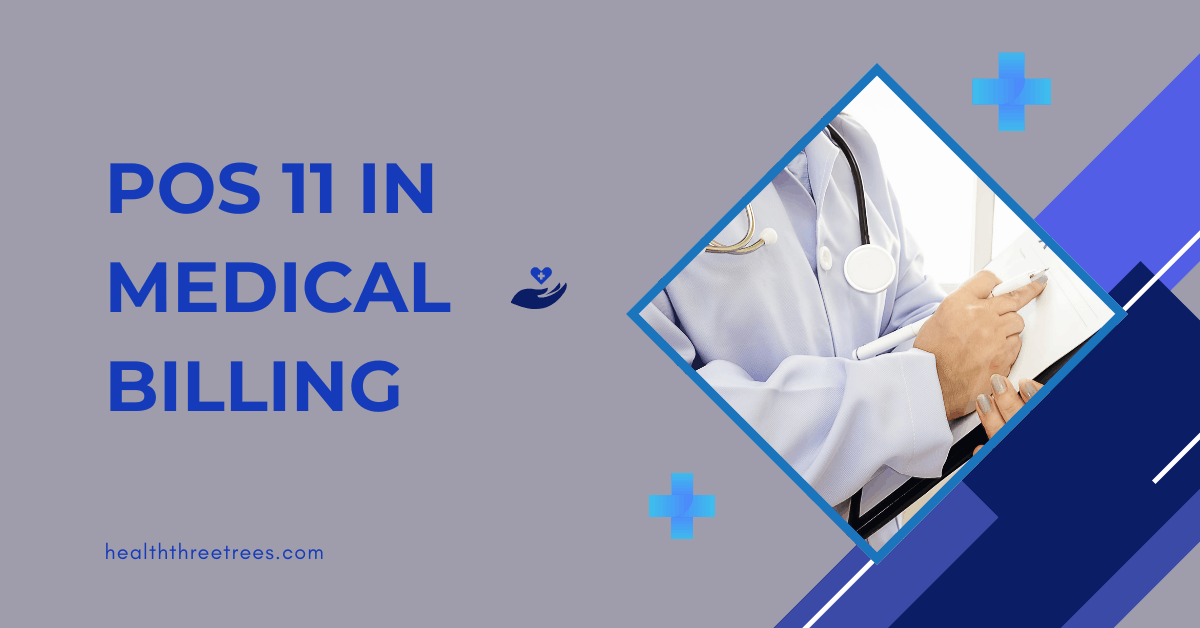
Ever noticed those numbers on your medical bills? One of those mysterious numbers in POS 11 in your medical billing. It’s simpler and more important for your bill. But what actually is it?
Every time you visit a doctor, the place you get treatment has its own special code known as the Place Of Service (POS) code. When a POS11 is applied to your bill, it means you have received your treatment in a medical office, clinic, or private practice.
These places are not government buildings or giant hospitals; they are community-based places.
Moreover, insurance gets to know how to pay for a patient after looking at the POS 11 tag on the medical bill. In this guide, you’ll learn everything about POS 11 in medical billing – what it means, why it matters, and best practices. Keep reading how a tiny code affects your claims, payments, and reimbursements.
Shall we start?
POS 11 Meaning in Medical Billing
You can get treatment anywhere big hospitals, clinics, dispensaries, or little offices. Hospitals and clinics have other rules to treat and deal with patients, while offices have different ones.
So, have you ever wondered what code doctors use when they treat you in their cozy little place of service 11 office?
That’s where POS 11 steps in. It’s actually a code that providers use to bill for outpatient services done right in their private offices – a place with comfy chairs, friendly nurses, and zero parking drama.
You can get routine checkups, a quick strep test, a small dermatology fix, or any everyday treatment here. The purpose of POS 11 in medical billing is to tell insurance companies that “this care happened here, not in a hospital.” It helps doctors get paid for the one-on-one care they provide.
Why Is POS 11 Such a Big Deal in Medical Billing?
POS 11 means “the services provided in a physician’s office.” It’s a big deal because this tiny code tells insurance companies even tiny details of the services provided at the location. Moreover, “where” is very crucial for insurance companies.
Services Under POS 11:
You must know which services fall under POS 11 in medical billing. This includes the following:
- Routine checkups
- Diagnostic tests
- Non-emergency treatments in a doctor’s office
In addition, these offices are workable only if they follow certain rules, such as:
- Proper equipment
- Trained staff
- Quality checks because standards matter
Using the right POS code is just like putting the right address on a package. When it is wrong, it can be returned. Additionally, using POS 11 can help reduce audits, avoid denials, and make your billing team breathe easier. Shortly, you can say:
POS 11 = doctor’s office services + proper billing + smoother reimbursement
Categories of POS 11:
Place of Service (POS) is just a two-digit number that tells insurance companies where the service happened. POS 11 acts like a “location pin” for medical billing. Don’t forget that these tiny numbers decide how much you’ll be paid as per your insurance for the services you take from a medical office.
These codes are split into two main groups:
- Facility POS Codes
- Non-facility POS Codes
Let’s dive deeper into it!
- Facility POS Codes
When you receive medical services in facilities like hospitals or nursing homes, codes are used to check the services provided. These codes are called facility POS codes. These codes help hospitals, nursing homes, and urgent care centres send clean and accurate claims that actually get paid.
Check the following common POS codes in healthcare:
- Inpatient Hospital (21): You are staying the night.
- Outpatient Hospital (22): You are in, treated, and out.
- Emergency Room Hospital (23): Treatment received after an accident.
- Urgent Care Facility (20): ER care but shorter bills and shorter waits.
- Skilled Nursing Facility (31): Where patients get round-the-clock skilled care.
- Hospice Facility (32): Compassionate comfort care.
- Ambulatory Surgical Center (24): Surgery without the overnight stay drama.
Facility POS codes make billing smoother, claims cleaner, and your RCM process less chaotic.
- Non-facility Codes
When you get treatment in your doctor’s office, your home, or your school nurse’s room. Hence, non-facility POS codes deal with treatments outside the hospital. When you visit your family doctor, get therapy at a local clinic, or see a specialist for a minor procedure, POS codes tell insurance companies the exact location of the services you get.
The following are the non-facility or medical billing office POS codes:
- School (03): From the school nurse to on-site therapy.
- Office (11): Your regular doctor’s office.
- Home (12): Care at your doorstep.
- Independent Clinic (49): Small clinics that are not tied to big hospitals.
So next time you get a bill, don’t freak out over the numbers; these numbers tell insurance companies the exact place where you get the medical service.
POS 11 vs POS 12
As you know, POS 11 in medical billing is for the private and tiny medical offices. When using POS11, doctors usually submit only a professional claim. Docs don’t have to worry about the separate facility fee.
Many healthcare providers consider POS11 to be their favorite because it’s ideal for routine exams, follow-ups, and basic care.
On the other hand, POS 22 is applied when you get medical services in a hospital outpatient department. When the patient doesn’t stay even a single night in the hospital, POS 22 comes in. Outpatient places may include the following:
- Imaging departments
- Outpatient surgery centres
- Infusion clinics
- Hospital-based specialty clinics
Things get a little tricky while using POS 22 because you have to submit 2 claims, such as :
- One professional claim from the doctor or any other provider
- One professional claim from the hospital
In this case, providers get lower payment while the patient’s bill is increased as the facility fee is also added to it. Here are the key distinctions between POS 11 and POS 22 below:
| Features | POS 11 | POS 12 |
| What It Means | Care given in a clinic or doctor’s office | Care provided ina hospitals outpatient department |
| Where It Happens | Standalone clinics | The hospital’s main campus |
| Who Owns It | Individual doctors or small practices | Hospitals own and manage it fully |
| Billing Style | One claim from the provider | Two claims: hospitals+provider |
| Facility Fees | None | Yes |
| Provider Payment | Higher, and the provider keeps the whole amount of money | Lower as hospitals have a share |
| Patient Cost | Lower out-of-pocket | Higher due to facility and provider fees |
| Type of Care | Routine visits, follow-ups, and checkups | Complex care like surgeries, cancer treatments, and more |
| Equipment Used | Basic tools such as exam tables and BP machines | MRI, surgical tools, and other advanced equipments |
| Billing Complexity | Simple and straightforward | More complex because more equipment is used |
| Documentation Needed | Patient’s basic info and insurance data | Approvals, hospital rules, and extra forms |
| Risk of Claim Denial | Low if coded correctly | Higher if anything is missing |
| Best For | Chronic care or daily/regular visits | Hospital-based treatments |
| Scheduling Control | Fully controlled by the practice | Controlled by hospital systems |
| Wait Times | Patients have to wait for a short time | Patients have to wait for a long time |
| Staff Involved | Doctor and office staff (nurses) | Nurses, admin, techs, doctors, and more |
| Compliance Risk | Lower and easy to manage | Higher risks due to audits and regulations |
| Operational Costs | Provider pays overhead, keeps revenue | Costs shared, so revenue reduced |
| Care Co-ordination | One team & one office | Multiple departments involved |
| Technology Needs | Basic EHR systems | Large hospitals-integrated systems |
| Credentialing | Simple and faster | Detailed and time-consuming |
Moreover, you take the same service from the same doctor but at different costs at different locations. That’s why it’s important to choose the right POS method for a patient’s bills, payments, and claim approvals.
Documentation required for POS 11
Using POS 11 in medical billing has never been complicated, but ignoring the rules can turn billing into a headache. Providers must follow CMS guidelines to avoid ignoring rules.
Remember that one small mistake in the place of service codes for doctors can trigger delays, disputes, and denied claims. That’s why clear documentation is necessary.
Before you see the patient, do a quick eligibility and insurance check. It’s a small step that saves you from big trouble. Verifying coverage upfront for POS 11 services helps improve billing accuracy and keeps claim denials from crashing the party.
Here’s what documents are required for POS 11:
- It includes clinical notes that clearly explain “why the service was medically necessary.
- Admins need appointment schedules, signed consent forms, insurance verifications, and any required pre-authorization.
These documents act as your billing safety net. But don’t worry, you don’t have to juggle all this manually. Practice management tools help keep documents organised, reduce errors, and speed up claims.
CMS POS 11 Guidelines
On October 31, 2025, the Centers for Medicare and Medicaid Services (CMS) dropped an update. CMS updated the final rule for Medicare payments under the Physician Fee Schedule (PFS) and other important Medicare Part B changes. These updates are going to be active from 1st January, 2026, so the clock is already ticking.
The 2026 final rule is a part of a big plan to improve how Medicare works overall, like:
- Better care quality
- Smarter payments
- More efficiency
- Room for innovation
Let’s break these rules down quickly:
- Telehealth Billing Rules: The rules change for the providers working from home. If you have a physical office, you’ll generate a bill using that location. On the other hand, virtual doctors have to enrol their home address as a practice location.
- Physician Fee Schedule (PFS) Updates: for 2026, CMS is going to adjust payment rates under the PFS. It means the money you get paid for services billed under POS 11 may go up and down depending on the update factor. Small change on paper, big impact on your bottom line.
- Behavioral Health Integration Gets a Boost: Cms is adding new optional G-codes for Advanced Primary Care Management (APCM). These codes support Behavioral Health Integration (BHI)and psychiatric collaborative care. It creates better coordination for patients and more billing opportunities for practices doing it right.
- Price Transparency: CMS is pushing price transparency across healthcare, including hospitals. Clinics have to be clear about costs.
The 2026 updates can be rewarding for the places that stay organized, compliant, and proactive. If your billing team isn’t cooperating with you, you can feel the pain of revenue in the future.
What are the Best Practices to Use POS Correctly
POS 11 in medical billing can bring several challenges, like insurance verification delays, ever-changing documentation rules, or coding mix-ups when staff turnover hits.
But if you want to navigate these challenges, follow some tips to use POS 11 correctly, which can lead to smooth billing and continuous revenue. These practices are as follows:
Verify the Service Location:
It’s recommended to always double-check the POS code on every claim. Using POS 11 for hospital visits? A big NO! Do not missclassify service locations because it can lead to claim denials and delayed payments. If you do it correctly from the start, it’ll save your time, avoid stress, and unnecessary phone calls.
Regular Training and Updates:
Staff come and go, and the rules keep changing. It’s important to get training regularly and be familiar with coding updates as well. If you keep your staff well-informed, it can be your best defence against costly mistakes.
Use the Latest Technology:
Many modern billing software systems can act like a lifesaver for you, such as BellMedEx’s Medifusion. This software has features like automated code suggestions and error detection that can help detect mistakes before you hit the “submit claim” button.
Conduct Routine Audits:
Instead of annual, do monthly or quarterly audits. You should make a structured checklist that ensures nothing slips through the cracks. For instance, an audit can catch if a CMS-1500 form mistakenly uses the wrong POS code before it reaches the insurer.
Implement Internal Codes:
Verification procedures and detailed documentation are crucial steps to get POS 11 done right. Always verify and review codes before submission.
Stay Compliant:
Compliance with HIPAA and state regulations is non-negotiable. Do regular checks to make sure your billing practices are up to date. It protects both your practice and your patient.
These are the best tips to follow if you want to use POS correctly. Workload can let you make mistakes, but these tips can be helpful on stressful days, too.
Common Mistakes in POS 11
POS codes have made the life of medical billers easier, but confusion still sneaks in. You made a small mistake, denied claims, and delayed payments are on your way. That’s why it’s important to know common POS 11 errors and ways to avoid them. These are as follows:
1. Missclassifying Service Location
It is considered to be one of the biggest mistakes in POS 11. Getting it right is necessary for proper billing and avoiding payment headaches. But the question is, how to avoid it? Periodic reviews and regular staff training can help ensure every service is classified correctly. It keeps claim denials to a minimum.
2. Incomplete Documentation
Keep your medical records and documents complete to avoid any traps. If a doctor skips any important detail of a patient, it’s hard to justify POS 11’s use. Hence, here’s a fix to bill correctly – pen down the following:
- A comprehensive patient history
- A detailed examination
- Complexity of medical decision-making (moderate to high)
Insurance companies want crystal clear documentation; you’ll get denied claims.
3. Incorrect coding on claims
Missing or incorrect coding can lead to destroyed cash flow. So, it’s important to code POS 11 accurately, which ultimately depends on good documentation, updated training, and following guidelines. Poor coding can lead to denied claims and lost revenue.
Tips to Avoid Errors
Here’s a breakdown of how to minimize or avoid errors below:
- Assign tricky cases, accuracy, and surety tasks to a lead coder
- Conduct regular audits to catch mistakes early
- Conduct team discussions to clarify confusing scenarios
- Keep your staff updated with ongoing coding training.
While keeping in mind the above tips, you can easily manage mistakes, stress, and work.
Is POS 11 Outpatient or Inpatient?
Are you confused whether POS 11 is inpatient or outpatient? POS 11 is outpatient. It is used for the services provided in a clinic or office. As the patient gets admitted to the hospital and leaves after a visit, that’s why it’s outpatient.
Understanding outpatient office billing, POS 11, is crucial because insurance companies process claims differently. POS 11 services cost less than inpatient care since the treatment level is lower and doesn’t involve the patient’s admission.
FAQs
What tools can smooth the billing process for POS 11?
The following are the best tools if you want a smoother billing process:
- Advanced medical billing software
- AI-powered coding tools
- Patient communication platforms
- Insurance verification systems
What is the most common rejection in medical billing?
Missing information is the cause of claim denials and rejections. About 60% of medical billing denials are happening due to missing information, and 40% of denial write-offs are also due to missing information.
What are 5 common CPT codes?
Here are some common Current Procedural Terminology(CPT) codes used:
- 99213: low-complexity office visits
- 99214: moderate-complexity office visits
- 97110: therapeutic exercise
- 97112: neuromuscular reeducation
- 99396: physical checkup
- And many more
How do the POS 11 and Occurrence Code relate?
POS 11 code shows where the service was given, while the occurrence code shows the date when a medical condition or ailment starts happening to the patient.
Final Thoughts
Applying POS 11 to medical billing is an easy task only when you consider it. Getting it right is a game-changer for healthcare providers. You just have to keep documentation clear, train your staff with updates, and use smart billing updates. Avoid making mistakes and keep your revenue smoother.
It can boost your practice’s finances and keep your patients happy. Stick to these practices, and there’s a great win for you!